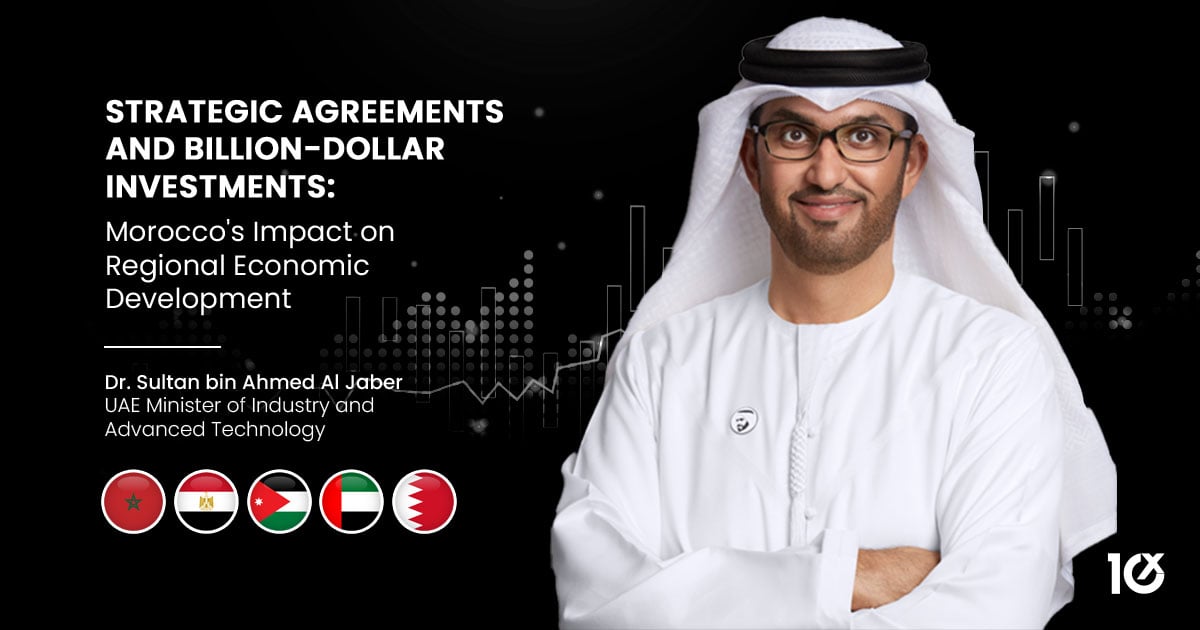

Strategic Agreements and Billion-Dollar Investments: Morocco's Impact on Regional Economic Development
The Kingdom of Morocco becomes the fifth member of the regional alliance, contributing advanced industrial capabilities and agreements, boosting sustainable economic development and collaboration in priority sectors.
In the presence of His Excellency Shaikh Khalid bin Abdulla Al Khalifa, Deputy Prime Minister of the Kingdom of Bahrain, the fourth meeting of the Higher Committee of the Industrial Partnership for Sustainable Economic Development began in Manama, Bahrain. During the proceedings, the Kingdom of Morocco became the fifth country to join the partnership aimed at strengthening regional industrial integration.
The meetings were attended by key dignitaries, including His Excellency Abdullah bin Adel Fakhro, Bahrain’s Minister of Industry and Commerce, His Excellency Dr. Sultan bin Ahmed Al Jaber, the UAE’s Minister of Industry and Advanced Technology, His Excellency Engineer Ahmed Samir Saleh, Egypt’s Minister of Industry and Trade, His Excellency Yousef Al Shamali, Jordan’s Minister of Industry, Trade and Supply, and His Excellency Riyad Mazour, Morocco’s Minister of Industry and Trade.
The Executive Committee of the Industrial Partnership for Sustainable Economic Development held meetings with officials, including industry and trade undersecretaries from the partner countries, on 10 January 2024 to discuss the progress of current projects and new proposals.
Key Partnerships and Projects Announced
The industrial partnership, initiated in Abu Dhabi in May 2022, has garnered strong support from member countries. His Highness Sheikh Mohamed bin Zayed Al Nahyan, President of the UAE, lauded the partnership’s role as a framework for regional cooperation, accelerating sustainable development, and enhancing self-sufficiency in critical areas.
During the meeting, notable agreements were inked, including:
UAE’s W Motors and Jordan’s Manaseer Group signed an US$80 million agreement to establish an electric car manufacturing plant in Jordan.
Manaseer Group and Bahrain’s Alba inked an MoU to supply 13,000 tons of aluminium fluoride annually, contributing to a US$20 million import substitution value.
Bahrain Steel signed a US$2 billion supply agreement with Emirates Steel for 2 million tons of raw materials over five years.
The UAE’s Ministry of Industry and Advanced Technology and Bahrain’s Ministry of Industry and Commerce signed an MoU leveraging the UAE’s National In-Country Value Program.
Ministerial Commitments and Welcoming Morocco
His Excellency Abdullah bin Adel Fakhro, Bahrain’s Minister of Industry and Commerce, emphasised Bahrain’s commitment to industrial development and highlighted the significance of hosting the event in Manama under the patronage of His Royal Highness Prince Salman bin Hamad Al Khalifa.
His Excellency Dr. Al Jaber conveyed greetings from His Highness Sheikh Mohamed bin Zayed Al Nahyan and underscored the importance of strategic partnerships for achieving national economic objectives. He welcomed Morocco’s addition to the partnership, citing its industrial prowess.
His Excellency Yousef Al Shamali, Jordan’s Minister of Industry, Trade and Supply, stressed the partnership’s role in accelerating sustainable economic development, while Engineer Ahmed Samir Saleh, Egypt’s Minister of Industry and Trade, expressed Egypt’s commitment to leveraging its competitive advantages.
His Excellency Riyad Mazour, Morocco’s Minister of Industry and Trade, highlighted the vision of King Mohammed VI and Morocco's dedication to achieving greater economic development through cooperation.
Morocco's Industrial Significance
Morocco, with a GDP exceeding US$134 billion in 2022, boasts advanced industrial capabilities in automotive, renewable energy, aviation, textiles, pharmaceuticals, phosphate, mining, and food industries. The country has attracted significant foreign direct investment and is actively implementing industrial modernisation plans.
Morocco's entry into the partnership is expected to enhance its competitiveness and contribute to the partnership's goals, fostering economic growth and creating employment opportunities. The nation's industrial sector is a key focus, with plans to increase its GDP contribution to 23 percent by 2030 and invest in renewable energy projects. Morocco’s agreements and robust industrial policies position it as a regional hub for manufacturing and industrial investment.
Related Stories
What’s Next for Emirati F&B Entrepreneurs?
Can Innovation Solve MENA’s Food Security Challenge?
Simplifying Business, Accelerating Growth